BESS4 Explained: The New NSW Battery Incentive for Northern Beaches Businesses
If you run a business on the Northern Beaches, whether it's a workshop in Brookvale, an office in Frenchs Forest or a café in Mona Vale, your power bill probably peaks right when your solar stops producing. Late afternoon and early evening is when network demand is highest, and when a battery does its most valuable work.
From 1 September 2026 , the NSW Government has a new incentive aimed squarely at that problem. It's called BESS4 , and it can take a meaningful chunk off the cost of a mid-sized battery for business and other non-residential sites.
Here's what BESS4 is, who qualifies, what it's worth, the rules you need to meet, and how it fits with the federal battery program.
Quick answer
BESS4 is an activity under the NSW Peak Demand Reduction Scheme (PDRS) . It gives an upfront discount on batteries with more than 20 kWh and up to 200 kWh of usable capacity, installed at non-residential sites from 1 September 2026. The NSW Government estimates the discount at about 30 to 40 per cent when you install new solar with the battery, and about 20 to 30 per cent for a battery on its own. There's no current closing date.
1. What BESS4 is, and why it's new
The PDRS pays for equipment that reduces electricity demand during NSW's summer peak. For BESS4, the scheme's peak demand reduction period runs from 2:30pm to 8:30pm . A battery that charges from solar (or off-peak power) and discharges in that window takes pressure off the grid, and the scheme rewards that.
BESS4 isn't a rebate you claim from the government. Instead, your installer partners with an Accredited Certificate Provider (ACP) , accredited by IPART, which creates Peak Reduction Certificates (PRCs) from your installation. The value of those certificates is passed on to you as a discount on the installed price. IPART notes there's no fixed value for PRCs, because the market sets them. That's why the government quotes an indicative range rather than a set dollar amount.
Until now, NSW's battery incentives were mostly aimed at homes. BESS4 fills the gap for businesses whose batteries are too big for a residential system but too small for a large commercial project.
2. Is your business eligible?
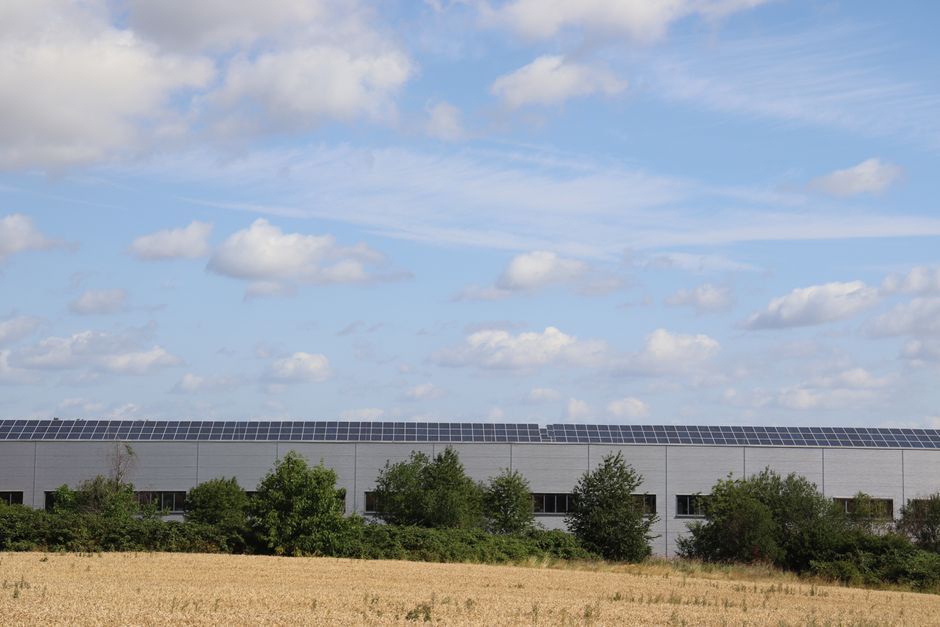
The PDRS Rule doesn't set a business size limit for BESS4. The key site test is that the battery must not be installed at a residential building or a data centre . That opens it up to a wide range of Northern Beaches sites: offices, shops, workshops, warehouses, clubs, medical practices and more.
Your battery and installation also need to meet these requirements:
- Size: more than 20 kWh and up to 200 kWh of usable capacity. Usable capacity is calculated as 90% of the nominal capacity on the Clean Energy Council list, so a battery listed at exactly 20 kWh nominal won't qualify.
- Approved product: the battery must be on the Clean Energy Council's approved batteries list.
- Accredited installer: the installer must hold Solar Accreditation Australia (SAA) grid-connected battery accreditation, and the work must meet AS/NZS 5139, the Australian standard for battery installations.
- Behind the meter: the system must be grid-connected at your site with all required network approvals. Off-grid sites aren't eligible.
- Smart and controllable: the battery must be internet-connectable and able to be controlled by a demand response aggregator. You don't have to join a virtual power plant (VPP) to qualify.
- Warranty: at least 10 years, guaranteeing at least 70% of usable capacity is retained after 10 years.
- Minimum spend: you must pay a net amount of at least $5,000 (excluding GST) for the installation.
- Timing: the battery must be installed and operating on the network on or after 1 September 2026. Batteries commissioned before then aren't eligible.
- One per site: the site must not have already received a BESS4 or BESS5 incentive. An existing battery that wasn't claimed under the scheme doesn't rule you out.
3. What BESS4 is worth
The discount depends on your battery's size, whether you add solar, and the market price of certificates when your system is installed. The NSW Government's indicative ranges are:
- Battery with new solar: about 30–40% off
- Battery only: about 20–30% off
You don't need solar to qualify, but you get the higher rate if new solar is installed within 90 days of the battery and is at least 25% of the battery's capacity . For example, a 100 kWh battery would need at least 25 kW of new solar.
For Northern Beaches businesses, there's one more factor. The scheme's formula includes a network loss factor, and for sites on the Ausgrid network, which supplies the Northern Beaches, that factor is 1.04. We'll run your figures through the scheme settings and give you an itemised quote that shows the incentive clearly.
4. Why a battery makes sense for Northern Beaches businesses
Ausgrid's small business network tariffs have a peak period from 3pm to 9pm on working weekdays in summer (November to March) and winter (June to August). For many businesses, that overlaps the busiest part of the trading day, just as rooftop solar output starts to fade.
A battery stores your midday solar and releases it through that peak period, reducing how much grid power you buy at the most expensive times. If your site is on a demand tariff, a battery can also help lower the peak demand you're charged for.
Is most of your power use in the afternoon and early evening? If so, a battery is likely to earn its keep.
5. What if you need more than 200 kWh?
Larger sites fall under BESS5 , which covers batteries of more than 200 kWh and up to 30,000 kWh (30 MWh). The incentive is calculated on up to 10,000 kWh of capacity. BESS5 batteries must be tested to the UL9540A fire safety standard, but they don't need to be on the Clean Energy Council list, and there's no minimum payment requirement.
6. Can you combine BESS4 with the federal battery program?
Yes, as long as your installation meets the eligibility rules of both. IPART confirms BESS4 can be stacked with the federal Cheaper Home Batteries Program, which is open to businesses as well as households for batteries of 5 to 100 kWh nominal capacity.
Keep your expectations realistic, though. Since 1 May 2026, federal support tapers by battery size: the full rate applies up to 14 kWh, 60% from 14 to 28 kWh, and 15% from 28 to 50 kWh. For most commercial-sized batteries, BESS4 will do the heavy lifting. Read more in our article on the latest changes to the Cheaper Home Batteries rebate.
Frequently asked questions
When does BESS4 start?
BESS4 applies to batteries installed and operating on or after 1 September 2026. There's currently no closing date.
Do I need solar panels to get BESS4?
No. Battery-only installations are allowed. Adding new solar of at least 25% of the battery's capacity within 90 days earns a higher incentive.
Can a home get BESS4?
No. BESS4 excludes residential buildings. Apartment buildings have a separate activity (BESS3), and the federal Cheaper Home Batteries Program covers households.
Is BESS4 a cash rebate?
No. It works through certificates. An Accredited Certificate Provider creates them from your installation, and their value comes off your installed price as a discount.
Talk to a local battery installer
BESS4 makes business batteries on the Northern Beaches much more affordable, with an estimated 20–40% off depending on your setup. The rules are specific, so getting the product, sizing, installation and paperwork right from the start matters.
Power & Solar Group is a Northern Beaches team with more than 10 years of experience installing solar and batteries. We can assess your site's energy use, size a system that suits it and explain exactly what BESS4 is worth for you. See our commercial solar and battery storage services, or call for a quote.
Recent Posts